Pest control service in Tampa requires deliberate perimeter engineering to counteract year-round humidity, saturated sandy soils, and porous building envelopes. BugLine Protection Co.
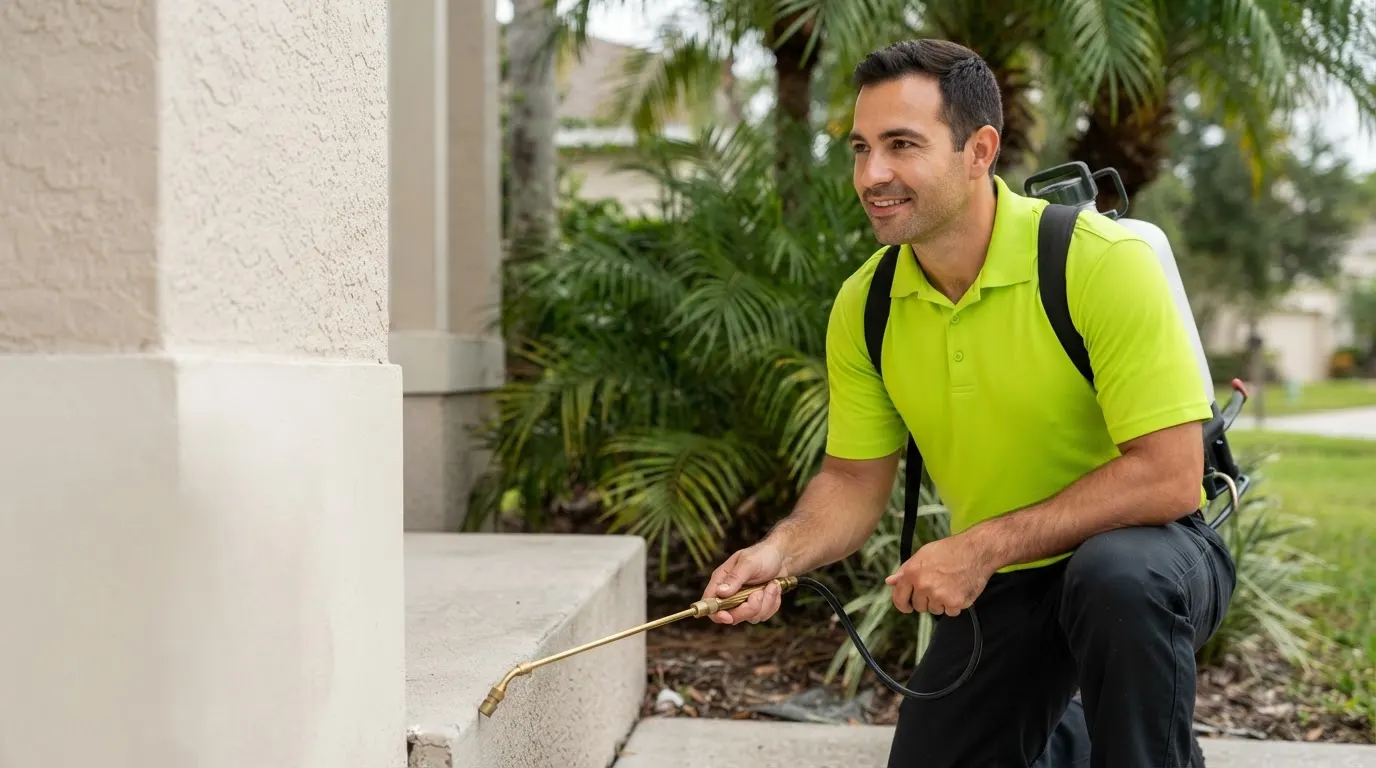
Pest control service in Tampa is an integrated structural and chemical defense discipline that eliminates active infestations and blocks insect and rodent entry pathways across subtropical Hillsborough County properties.
Every service reflects the same meticulous attention to detail, whether it's a single job or a larger pest control sevice project across Tampa.
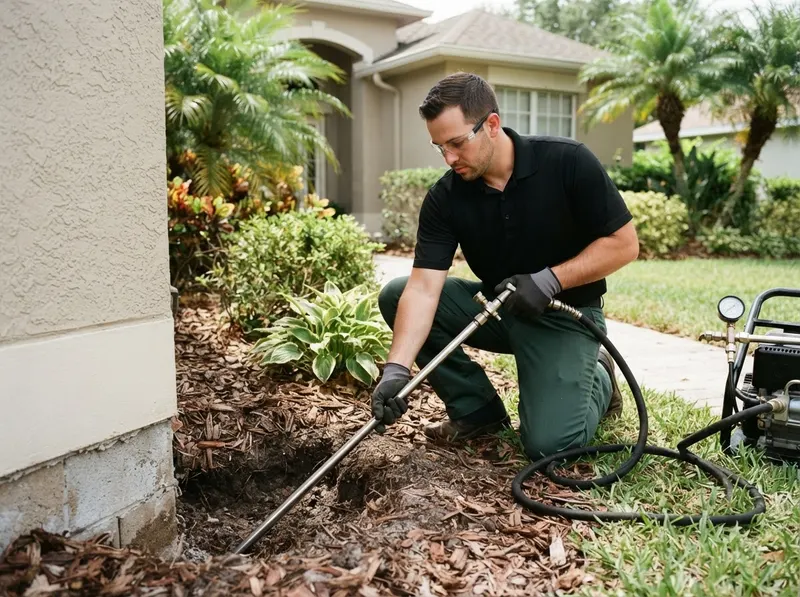
Subterranean termites, primarily Reticulitermes flavipes and invasive Formosan subterranean termites ( Coptotermes formosanus ), represent the most destructive structural wood-destroying organisms in coastal Florida. These social insects construct subterranean shelter tubes out of soil, saliva, and fecal matter to traverse exposed concrete stem walls and access structural sills, joists, and wall framing. BugLine Protection Co. installs rigorous exterior perimeter chemical soil barriers by trenching the immediate soil perimeter adjacent to foundation slabs, stem walls, and supporting piers to a depth of 6 inches and a width of 6 inches. Non-repellent liquid termiticides containing fipronil or imidacloprid are injected at calibrated rates of 4 gallons per 10 linear feet per foot of depth, adhering strictly to EPA pesticide regulations . For structures situated on monolithic slabs with attached patios, expansion joints, or abutting carports, technicians perform sub-slab rotary-hammer drilling at 12-inch intervals through the concrete to treat underlying aggregate bases before sealing drill holes with hydraulic cement plugs. For structures requiring continuous perimeter surveillance, we integrate the National Pest Management Association structural protection guidelines, deploying exterior in-ground baiting stations loaded with chitin synthesis inhibitors like noviflumuron every 10 to 15 linear feet along the drip line. Termite workers that contact treated soil or ingest bait transfer the active non-repellent toxicant throughout the subterranean colony through mutual grooming (trophallaxis), eradicating both secondary reproductives and primary queens within weeks without alerting the colony to disperse.
Get a quote →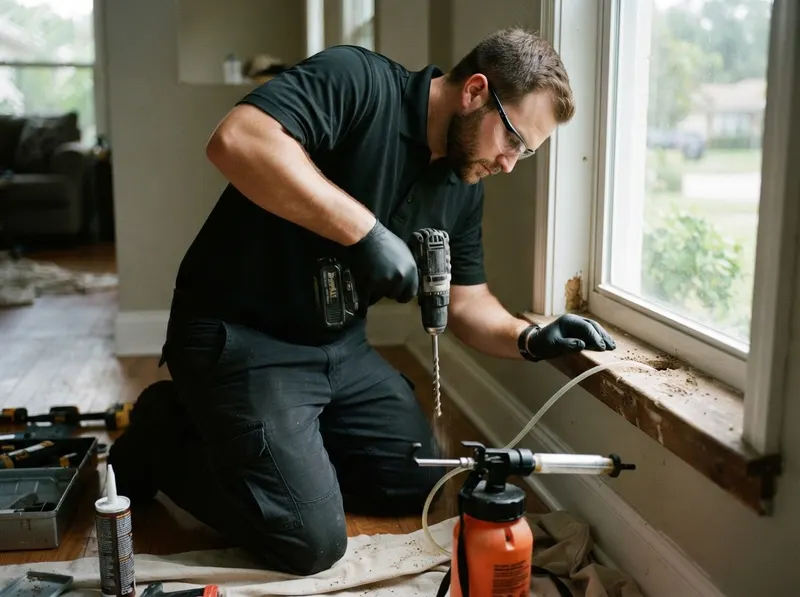
Drywood termites ( Cryptotermes brevis ) do not maintain contact with soil moisture, instead infesting sound structural framing, roof trusses, fascia boards, and window framing directly during seasonal nuptial flights between March and June. Infestations reveal themselves through microscopic kick-out holes through which workers eject characteristic six-sided, concave hexagonal fecal pellets (frass) that gather on horizontal surfaces beneath infested timbers. BugLine Protection Co. conducts precision localized remediation using high-output borescopes, acoustic detection probes, and optical thermal imaging to map internal wood galleries without unnecessarily damaging finish drywall. Once localized gallery networks are identified, technicians drill small 1/8-inch access portals directly into the heartwood galleries and inject specialized non-repellent liquid formulations, expanding foam termiticides, or concentrated disodium octaborate tetrahydrate (DOT) solutions. The injected foam expands at a 30:1 ratio, navigating the internal galleries to coat the insect cuticles and saturate the structural cellulose fibers. Where raw architectural timber is accessible within attic spaces, crawlspaces, or unfinished subfloors, technicians apply pressurized topical borate applications conforming to standards established by the Florida Building Commission . These structural salt penetrations establish a permanent, mineralized chemical shield that crystallizes inside the wood grain, functioning as an internal stomach poison that prevents drywood termite nymphs from digesting structural cellulose, eliminating localized colonies while preserving existing drywall finishes and structural integrity.
Get a quote →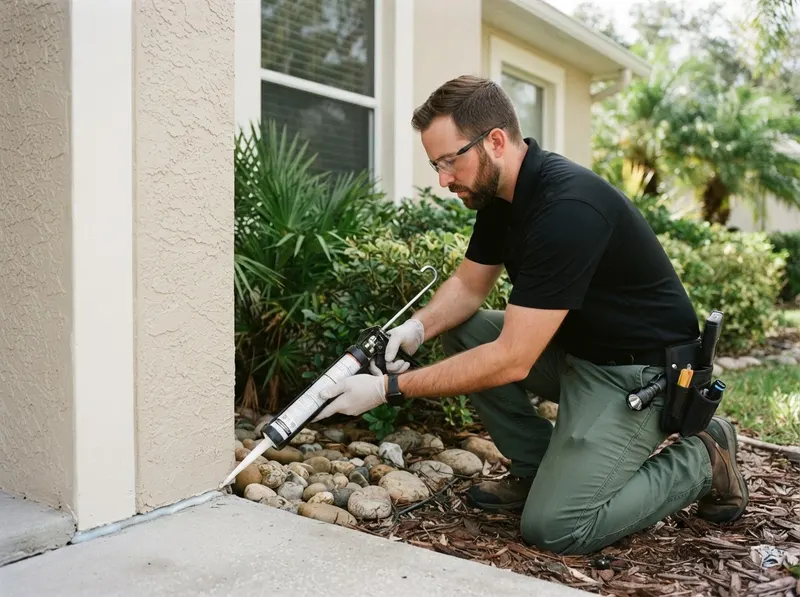
Large peridomestic cockroaches, specifically the American cockroach ( Periplaneta americana ) and the Smokybrown cockroach (Periplaneta fuliginosa), colloquially classified across Florida as palmetto bugs, rely on excessive exterior dampness, decaying mulch, palm leaf sheaths, and tree canopy hollows. During excessive rainfall or prolonged heat, these sanitary vectors migrate indoors through deteriorated weatherstripping, garage door threshold sweeps, plumbing penetrations, weep screeds, and roofline vents. To halt interior ingress, BugLine Protection Co. deploys a multi-tier perimeter barrier protocol. Technicians apply micro-encapsulated synthetic pyrethroids or suspension concentrates in a continuous 3-foot band up the exterior foundation masonry and 5 feet outward over adjacent soil, gravel, and mulch zones. Micro-encapsulated formulations are engineered to withstand Florida's intense ultraviolet radiation and frequent torrential precipitation, gradually releasing active chemistries across 60- to 90-day maintenance cycles. Exterior harborage sites, including irrigation boxes, dense ground cover, and landscape timbers, receive targeted broad-spectrum water-resistant granular baits formulated with hydramethylnon or spinosad. Interior utility penetrations and plumbing chaseways receive specialized micro-injections of non-staining hydramethylnon or clothianidin insecticidal gel baits, targeting internal biological voids without requiring broadcast chemical dispersal across baseboards. Physical exclusionary measures, such as replacing damaged vinyl sweeps, sealing pipe escutcheons with copper mesh, and securing crawlspace screens, reinforce the chemical perimeter to block entry permanently.
Get a quote →Invasive ant species common throughout the Tampa Bay basin, including ghost ants ( Tapinoma melanocephalum ), white-footed ants (Technomyrmex albipes), and Rover ants (Brachymyrmex patagonicus), create severe management challenges due to their polygyne social structures (multiple queens per colony) and tendency toward rapid budding. Repellent off-the-shelf consumer sprays trigger defensive splitting, which scatters secondary colonies into separate wall voids, baseboard chaseways, and electrical outlets throughout the property. BugLine Protection Co. utilizes an insect-behavior model focused entirely on non-repellent chemistries and systemic baiting matrices. Technicians locate active foraging trails traversing exterior foundation walls, structural expansion joints, and vegetation contacting the roofline. Non-repellent active ingredients, such as dinotefuran, indoxacarb, or fipronil, are systematically deployed as low-dose topical perimeter sprays that avoid triggering defensive alarm pheromones. Inside affected kitchens, bathrooms, and utility closets, technicians place targeted micro-droplets of hydro-active sweet and protein-based liquid attractants in concealed structural crevices. Foraging worker ants ingest these slow-acting synthetic toxins and transport them back to subterranean and intra-wall nesting chambers, distributing the lethal payload directly to egg-laying queens and developing larvae through trophallaxis. For aggressive outdoor mound-building species like the red imported fire ant ( Solenopsis invicta ), technicians execute calibrated mechanical broadcast baiting across turfgrass perimeters using methoprene or hydramethylnon bait granules, sterilizing queens and neutralizing territorial mound hazards across the exterior perimeter.
Get a quote →Roof rats ( Rattus rattus ) and Norway rats (Rattus norvegicus) exploit the mature oak and palm canopies of Hillsborough County to gain direct access to residential rooflines, soffit vents, and attic insulation. Entering through openings as narrow as 1/2-inch, these biological vectors soil structural fiberglass insulation, chew through high-voltage electrical wiring, and introduce secondary ectoparasites. BugLine Protection Co. executes rodent eradication through mechanical exclusion and structural hardening rather than reliance on unsecured outdoor toxic baits that risk secondary poisoning to non-target predatory wildlife. Technicians conduct exhaustive structural inspections across ridge caps, barrel tile roof valleys, plumbing vent flashing, crawlspace access hatches, and gable louvers. Entry portals are mechanically sealed using heavy-gauge 1/4-inch galvanized welded wire hardware cloth, copper mesh, sheet metal flashing, and steel-reinforced expanding structural urethanes that resist chewing. Once the property envelope is verified as structurally closed, interior attic and crawlspace spaces undergo aggressive mechanical trapping protocols. Technicians deploy expanded-trigger snap traps and mechanical capture arrays calibrated for specific travel lanes along ceiling joists, structural support plates, and plumbing stacks. Daily monitoring and capture retrieval continue until zero new activity is recorded, after which technicians can complete sanitary sanitation and localized insulation remediation using EPA-registered antimicrobial atomization.
Get a quote →Mosquito pressure in the Tampa Bay region intensifies rapidly from May through October, driven by heavy summer rains, coastal salt marshes, and standing drainage water. Species such as the Asian tiger mosquito ( Aedes albopictus ), yellow fever mosquito (Aedes aegypti), and marsh mosquitoes ( Culex species ) breed rapidly in standing water collected within catch basins, native bromeliads, clogged gutter profiles, and dense landscape foliage. BugLine Protection Co. implements multi-phase mosquito reduction protocols that conform to the regulatory mandates established by the Florida Department of Agriculture and Consumer Services (FDACS) . Technicians deploy commercial gas-powered backpack atomizers to apply micro-encapsulated synthetic pyrethroids or plant-derived biological compounds to the undersides of broadleaf foliage, dense ornamental hedges, structural soffits, and sheltered exterior patio boundaries where adult mosquitoes rest during daylight hours. To prevent larval emergence, standing water reservoirs that cannot be drained, including landscape retention ponds, decorative water features, and subsurface french drains, are treated with biological larvicides containing Bacillus thuringiensis israelensis (BTI) or insect growth regulators like pyriproxyfen. These target-specific microbial applications disrupt the larval molting cycle without harming beneficial pollinators, aquatic fauna, or domestic companion animals.
Get a quote →Bed bugs ( Cimex lectularius ) reproduce rapidly inside residential properties, multi-family housing complexes, and hospitality assets, concealing themselves in mattress seams, box springs, structural headboards, wall sockets, and baseboard crevices. Over-the-counter pyrethroid foggers are largely ineffective due to documented genetic resistance and cause active populations to scatter deeper into contiguous wall voids. BugLine Protection Co. deploys targeted chemical micro-injection protocols and high-temperature thermal remediation systems to eliminate all life stages, from eggs to adults. During localized structural heat treatments, high-output industrial electric heaters and specialized circulation blowers elevate ambient room temperatures to lethal zones between 120°F and 135°F. Structural thermal probes track heat transfer deep into mattress interiors, upholstered furniture cores, and wall voids, maintaining lethal exposure thresholds for a minimum of 4 hours to achieve complete thermal denaturing of bed bug proteins. For integrated or localized chemical treatments, technicians utilize structural crack-and-crevice injectors to place micro-encapsulated dual-action insecticides and amorphous silica gel desiccant dusts. The silica dust bonds electrostatically to the bed bug cuticle, rapidly stripping away its protective waxy layer to cause fatal dehydration. Because desiccant dusts kill through physical abrasion and moisture depletion rather than biochemical pathways, bed bugs cannot develop chemical resistance, guaranteeing permanent mechanical protection within treated electrical outlets, framing junctions, and decorative trim.
Get a quote →The warm, damp climate of Tampa permits cat fleas ( Ctenocephalides felis ), brown dog ticks ( Rhipicephalus sanguineus ), and blacklegged ticks (Ixodes scapularis) to complete reproductive cycles outdoors year-round. These parasites infest shaded sandy ground, crawlspaces, under-deck clearances, and turfgrass edges, readily transferring to pets and human hosts. An uncontrolled flea population establishes extensive pupal reservoirs within interior carpets, floorboard seams, and pet bedding, where pupae remain protected inside protective silk cocoons for months awaiting environmental vibrations from passing hosts. BugLine Protection Co. applies coordinated indoor and outdoor remediation strategies. Outdoors, technicians treat perimeter tree lines, shaded turfgrass, crawlspace voids, and structural foundations with light-stable residual adulticides combined with insect growth regulators (IGRs) like pyriproxyfen. The IGR arrests the juvenile development cycle, preventing flea larvae from pupating and sterilizing adult ticks. For interior spaces, technicians apply precision low-pressure surface treatments to carpeted zones, upholstery edges, and subfloor transitions using combinations of adulticides and pyriproxyfen to stop current biting populations and halt consecutive reproductive waves. Detailed property preparation checklists guide property owners on laundering, vacuuming, and coordinating veterinary treatments to ensure continuous biological disruption.
Get a quote →You get a firm, itemized quote for your pest control sevice before any work begins, no surprises, no pressure.
Careful prep, tidy work, and a full cleanup when we are done. We treat your home and belongings like our own.
The same trusted, background-checked team from the first call to the final check.
Selecting appropriate pest defense depends on insect biology, building architecture, landscaping saturation, and the severity of active harborage. If an attic structure exhibits gnawed electrical conduits, soiled fiberglass batts, or nocturnal scratching sounds, choose mechanical rodent exclusion rather than standalone anticoagulant baiting. Sealing masonry transitions and roofline interfaces with 1/4-inch galvanized steel mesh permanently halts re-entry, whereas chemical baiting alone merely culls active individuals while leaving the structural envelope vulnerable to incoming colonial dispersals.
For subterranean termite intrusions along monolithic slabs or stem walls, choose continuous exterior trenching with non-repellent liquid termiticides over surface-level perimeter bait monitoring if immediate structural preservation is required. Non-repellent fipronil formulations create an immediate lethal zone bound to silica soil particles, whereas standalone exterior cellulose bait stations require variable worker-foraging intervals that may take 60 to 120 days to collapse parent reproductive nodes. If Smokybrown or American cockroaches inhabit moisture-rich pine bark mulch, choose targeted exterior barrier applications combined with interior micro-gel baiting rather than broadcast interior baseboard spraying.
Residual perimeter band applications neutralize outdoor harborages before pests cross structural thresholds, preventing airborne chemical dispersal within interior living quarters. When selecting between tented structural fumigation and precision localized termiticide injections for drywood infestations, consider the infestation perimeter: whole-structure gas fumigation is warranted when multiple colonies nest across inaccessible truss plates and wall studs, whereas localized chemical or borate wood treatments suffice when localized frass deposits remain confined to an isolated, exposed door frame or window buck. The primary trade-off between exterior perimeter management and comprehensive mechanical exclusion involves upfront capital versus recurring maintenance: high-grade physical exclusion requires intensive structural retrofitting of eaves, flashing, and soffits, whereas ongoing chemical perimeter defense demands regular barrier renewal every 60 to 90 days to withstand Florida's ultraviolet degradation and hydraulic rain leaching.
Every project gets a firm, written price after a free on-site visit. Ranges below for orientation.
Tell us about your pest control sevice job and we'll send a clear, written quote, usually the same day. Or just call and talk to a real Tampa pro.
(656) 250-2992
Properties throughout Tampa encounter persistent biological pest vectors due to extreme environmental conditions unique to coastal Hillsborough County. High annual precipitation averaging 51 inches per year, coupled with daily high humidity and sandy silica soil composition, accelerates the chemical breakdown of conventional consumer insecticides within 21 to 30 days. In historic neighborhoods like Hyde Park and Tampa Heights, century-old Craftsman bungalows built on unsealed brick-and-mortar pier-and-beam foundations feature damp, vented crawlspaces that provide ideal environmental conduits for subterranean termite networks and roof rat populations. Along mature tree-canopied avenues near Bayshore Boulevard, Palma Ceia, and Davis Islands, live oak branches, cabbage palms, and Spanish moss canopies extend directly over structural rooflines, functioning as aerial highways for rodent vectors and Smokybrown cockroaches seeking entry into attic louvers, soffits, and barrel tile roof junctions. In northern suburban developments such as Westchase, Carrollwood, and New Tampa, sprawling residential subdivisions engineered around reclaimed cypress wetlands, conservation swales, and artificial stormwater detention ponds face massive seasonal surges of Culex mosquitoes, nuisance midges, and subterranean Formosan termite swarms. BugLine Protection Co. tailors every treatment strategy directly to these local architectural constraints and ecological realities. Our technicians calculate accurate hydraulic soil absorption rates, assess local seasonal water tables, and install non-repellent structural perimeters designed specifically to endure the intense solar degradation and torrential summer rainfall characteristic of the Tampa Bay watershed.
Free estimates for Tampa & the surrounding area.
For standards, safe disposal, and service guidance on pest control sevice in Tampa, FL, useful references include U.S. EPA, ENERGY STAR, U.S. Dept. of Energy, Consumer.gov, U.S. Census Bureau, and Google Maps. General consumer and small-business resources are available from USA.gov, Better Business Bureau, FTC Consumer Advice, U.S. Small Business Administration, and Ready.gov.
 BugLine Protection Co.